


导语
珠宝,是永恒与瞬间的交织,是艺术与工艺的完美结合。每一件珠宝背后,都承载着一个生动的创作故事。今天,我们有幸采访到叶宸伊,一位将独特艺术视角与卓越手工雕刻技艺完美融合的珠宝设计师。叶宸伊的作品不仅仅是饰品,更是精雕细琢的艺术品,每一件都承载着深厚的情感与文化内涵。通过繁复的手工雕刻过程,原材料在其巧手下变成了复杂而精美的艺术品,展现了设计师对自然界的敏锐感知与对美学的深刻理解。从大自然的有机形态到人类内心的细腻情感,每一颗宝石与每一道雕刻的线条,都是她艺术世界的独特表达。在这次专访中,我们将走近叶宸伊的创作过程,探讨手工雕刻与珠宝设计如何结合,成为她独特自我表达与美学探索的语言。
Introduction
Jewelry is the intersection of eternity and moments, the perfect fusion of art and craftsmanship. Behind every piece of jewelry lies a vivid story of creation. Today, we are honored to interview Chenyi Ye, a jewelry designer who perfectly blends a unique artistic vision with exceptional skill, particularly in the intricate craft of hand-engraving. Chenyi’s creations are not just accessories; they are finely crafted works of art, each carrying profound emotional and cultural significance. Through the meticulous process of hand-carving, raw materials are transformed into complex and exquisite masterpieces, showcasing the designer’s keen sensitivity to nature and deep understanding of aesthetics. From the organic forms found in nature to the delicate emotions of the human soul, each gemstone and each carved line is a unique expression of her artistic world. In this interview, we will delve into Chenyi’s creative process and explore how hand-engraving and jewelry design come together, becoming a distinctive language for self-expression and aesthetic exploration.
第一章:艺术家的创作之路与独特风格
Chapter 1: The Artist’s Creative Journey and Unique Style
1.1 个人背景与经历
叶宸伊,作为一位知名珠宝设计师,凭借其卓越的手工雕刻技艺和对自然元素的独特理解,赢得了高端定制珠宝界的广泛认可。她的设计理念深受自然界的启发,特别注重通过珠宝讲述顾客的个人故事。每一件珠宝作品不仅是艺术的表达,更是佩戴者与自然、情感的独特连接。
叶宸伊成长在多元的文化背景中,她在意大利米兰的欧洲设计学院接受了专业的珠宝设计教育,培养了扎实的技艺基础和对美学的敏感触觉,在校期间与宝曼兰朵公司设计总监Vincenzo Castaldo共同完成设计项目。毕业后,师从佛罗伦萨欧纳菲珠宝学院Giuseppe Casale, Filippo Vinattieri教授学习传统手工雕刻技法,并积极与不同文化和背景的顾客合作,逐步确立了自己的设计风格。
通过多年的实践经验,叶宸伊逐渐将东西方文化相结合,形成了独具特色的珠宝设计风格。她善于从客户的故事出发,挖掘个人情感和生活背景,将这些元素融入珠宝设计中,创造出符合个性需求的独特作品。
1.1 Personal Background and Experience
Chenyi Ye, a renowned jewelry designer, has gained widespread recognition in the high-end custom jewelry world for her exceptional hand-engraving skills and unique understanding of natural elements. Her design philosophy is deeply inspired by nature, with a special focus on telling the personal stories of her clients through jewelry. Each piece she creates is not only an artistic expression but also a unique connection between the wearer, nature, and emotions.
Growing up in a multicultural environment, Chenyi received professional jewelry design education at the Istituto Europeo di Design(IED) in Milan, Italy, where she developed a solid technical foundation and a keen aesthetic sensibility. During her time there, she collaborated on design projects with Vincenzo Castaldo, the Design Director of Pomellato. After graduating, she studied traditional hand-engraving techniques under Giuseppe Casale and Filippo Vinattieri at Le Arti Orafe(LAO) Jewelry Academy in Florence. She also actively worked with clients from various cultural backgrounds, gradually establishing her own design style.
Through years of practical experience, Chenyi has gradually combined Eastern and Western cultures, forming a distinctive jewelry design style. She excels at starting from her clients’ personal stories, exploring their emotions and life backgrounds, and incorporating these elements into her designs to create unique pieces that cater to their individual needs.
1.2 艺术风格与创作哲学
叶宸伊的设计风格融合了自然美学与精湛的手工雕刻技艺,作品常以植物、动物等自然元素为灵感,展现大自然的和谐美感。她尤其注重婚戒设计,认为婚戒不仅是婚姻的象征,更是承载情感与承诺的信物。每一枚婚戒都力求体现佩戴者的独特故事和情感。
她的珠宝作品不仅是装饰,更是情感与文化的载体。通过珠宝与佩戴者之间的深刻联系,叶宸伊传递着爱情、誓言和个性。她的设计始终强调个性化和情感化,每件作品都力求展现佩戴者的精神世界。
在创作中,叶宸伊融合东西方文化元素,保留传统手工雕刻的美感,同时融入现代简约设计。她力求在工艺与美学之间找到完美平衡,使每一件珠宝作品既具艺术价值,又能触动佩戴者的内心。此外,受访者也在佛教雕塑领域进行创作,探索精细的佛教工艺品,融入佛教文化的精神内涵,将雕刻艺术与哲学深度结合,丰富了她的艺术视野。 她的雕刻作品“面谱”系列曾在巴黎卢浮宫现代艺术馆展出,将中国文化带入欧洲的艺术殿堂,进一步彰显了她在跨文化艺术交流中的重要地位。
1.2 Artistic Style and Creative Philosophy
Chenyi Ye’s design style blends natural aesthetics with exquisite hand-engraving techniques. Her works are often inspired by natural elements such as plants and animals, showcasing the harmonious beauty of nature. She places particular emphasis on wedding ring design, believing that a wedding ring is not only a symbol of marriage but also a carrier of emotion and commitment. Each wedding ring is crafted to reflect the unique story and emotions of the wearer.
Her jewelry is not just decoration, but a carrier of emotion and culture. Through a deep connection between the jewelry and the wearer, Chenyi conveys love, vows, and individuality. Her designs consistently focus on personalization and emotional depth, striving to express the wearer’s inner world in each piece.
In her creative process, Chenyi integrates elements of both Eastern and Western cultures, preserving the beauty of traditional hand-engraving while incorporating modern minimalist design. She seeks to strike a perfect balance between craftsmanship and aesthetics, ensuring that each piece of jewelry is not only an artistic masterpiece but also resonates deeply with the wearer. In addition, Chenyi has also ventured into the field of Buddhist sculpture, exploring intricate Buddhist artifacts and incorporating the spiritual essence of Buddhism into her work. This fusion of carving art and philosophy has enriched her artistic vision.
Her engraving collection, “Face Masks of Beijing Opera,” was exhibited at Carrousel du Louvre, Pairs, France bringing Chinese culture into European art institutions and further highlighting her significant role in cross-cultural artistic exchange.
第二章 艺术与商业的平衡
Chapter 2: The Balance Between Art and Commerce
2.1 是艺术家还是设计师
对于叶宸伊来说,从纯粹的艺术创作转变为珠宝设计师的角色并非一蹴而就。最初,她的创作完全源自个人的艺术探索和对自然的敏感观察,艺术是她自我表达的方式。然而,随着市场需求的变化以及客户对个性化、定制珠宝的兴趣日益增长,她逐渐意识到,珠宝不仅是艺术的延伸,更是商业与情感表达的载体。设计师的角色要求她将艺术创作与实际需求结合,既要满足客户的审美和情感需求,又要考虑到市场的可行性与商业化的运作。
在这个过程中,叶宸伊深刻反思艺术与商业之间的关系。她认为,珠宝设计是一种跨越艺术和商业的桥梁,既需要艺术家的创造力,又离不开商业的驱动。虽然商业化的过程中不可避免地有妥协,但她始终坚信,设计师的使命是通过创新和巧思,将艺术与商业融合,创造出既有艺术价值又能迎合市场需求的珠宝作品。
2.1 Artist or Designer
For Chenyi Ye, the transition from pure artistic creation to the role of a jewelry designer was not an overnight change. Initially, her work was entirely driven by personal artistic exploration and a sensitive observation of nature; art was her way of self-expression. However, as market demands shifted and clients’ growing interest in personalized, custom-made jewelry increased, she gradually realized that jewelry is not just an extension of art, but also a medium for commercial and emotional expression. The role of a designer required her to merge artistic creation with practical needs, satisfying both the aesthetic and emotional demands of clients while considering the feasibility and commercialization of the designs.
During this process, Chenyi reflected deeply on the relationship between art and commerce. She believes that jewelry design serves as a bridge between art and business, requiring both the creativity of an artist and the driving force of commerce. Although compromises are inevitable in the commercialization process, she firmly believes that the designer’s mission is to blend art and business through innovation and ingenuity, creating jewelry that holds artistic value while also meeting market demands.
2.2 珠宝设计的市场需求与艺术表达
在珠宝行业,尤其是奢侈品领域,艺术与商业之间的博弈尤为明显。随着消费者对个性化、高端定制珠宝的需求增加,市场对珠宝设计师的要求不仅限于传统的工艺技能,还需要具备与客户心灵对接的能力。对于叶宸伊来说,保持艺术创作的独立性与忠诚度是她始终坚持的原则。她认为,珠宝的市场需求和艺术表达之间并非对立,而是相辅相成的。珠宝设计应在传达情感和文化的同时,也能符合客户对独特性和奢华感的追求。
虽然商业化的背景下不可避免地会面临市场压力,但叶宸伊始终坚持自己的创作理念,不让市场需求过度妥协艺术的本质。她认为,真正的珠宝艺术作品应超越商业化的短期利益,走向长期的价值传承,因此她会在创作过程中始终坚守对艺术的忠诚与创新。
2.2 Market Demand for Jewelry Design and Artistic Expression
In the jewelry industry, especially in the luxury sector, the balance between art and commerce is particularly evident. As consumer demand for personalized, high-end custom jewelry increases, the expectations of jewelry designers go beyond traditional craftsmanship. Designers are also required to connect deeply with their clients’ emotions and stories. For Chenyi Ye, maintaining the independence and integrity of artistic creation has always been a guiding principle. She believes that market demand and artistic expression are not opposites but complementary. Jewelry design should convey emotions and culture while also meeting clients’ desires for uniqueness and luxury.
Although the commercial backdrop inevitably creates market pressures, Chenyi remains steadfast in her creative vision, ensuring that market demands do not compromise the essence of art. She believes that true jewelry art should transcend the short-term interests of commercialization and focus on long-term value and legacy. Therefore, she consistently upholds her loyalty to art and innovation throughout the creative process.
第三章 创新与技术的结合:传统与现代的交融
Chapter 3: The Fusion of Innovation and Technology
3.1 传统工艺与现代技术的融合
在珠宝设计领域,叶宸伊深知传统手工雕刻与现代技术的结合是推动设计创新的关键。她在设计中始终保留传统手工雕刻和金属工艺的重要地位,认为手工雕刻所带来的艺术感和细腻度是机器无法替代的。然而,她也积极尝试将现代技术,如3D打印和数控激光雕刻技术,融入到珠宝设计过程中。这些技术不仅提升了设计的精细度和复杂性,还为珠宝的细节表现和创新结构提供了更多可能性。通过传统与现代的有机结合,叶宸伊不仅保留了珠宝设计的精髓,还通过技术创新拓宽了创作空间。
3.1 The Integration of Traditional Craftsmanship and Modern Technology
In the field of jewelry design, Chenyi Ye understands that the integration of traditional handcraft and modern technology is key to driving design innovation. She continues to place great importance on traditional hand carving and metalworking, believing that the artistry and fine details achieved through handcraft are irreplaceable by machines. However, she also actively incorporates modern technologies, such as 3D printing and laser engraving, into the jewelry design process. These technologies not only enhance the precision and complexity of designs but also provide more possibilities for the details and innovative structures of the jewelry. Through this organic combination of tradition and modernity, Chenyi preserves the essence of jewelry design while expanding her creative space through technological innovation.
3.2 技术推动下的设计创新
现代技术的引入为叶宸伊的珠宝设计带来了前所未有的创新可能。3D打印技术使她能够在设计初期快速制作出复杂的模型,极大地提高了设计效率和精度。同时,激光雕刻技术让她能够实现更加精细的雕刻细节,打造出具有高度复杂性的珠宝作品。这些技术工具不仅帮助她更好地实现复杂设计理念,还赋予了她更大的创作自由,使得每一件作品都能够在艺术性和技术性之间达到完美平衡。叶宸伊通过技术的不断创新,能够探索更多独特的设计语言和表现形式,推动珠宝设计向更高层次发展。
3.2 Design Innovation Driven by Technology
The introduction of modern technology has opened up unprecedented possibilities for Chenyi Ye’s jewelry design. 3D printing allows her to quickly create complex models during the early stages of design, significantly improving efficiency and precision. At the same time, laser engraving enables her to achieve finer carving details, creating highly intricate jewelry pieces. These technological tools not only help her bring complex design ideas to life but also provide greater creative freedom, allowing each piece to reach a perfect balance between artistry and technicality. Through continuous innovation in technology, Chenyi Ye is able to explore unique design languages and expressions, pushing jewelry design to new heights.
3.3 珠宝设计的未来:创新与工艺的无缝衔接
展望未来,叶宸伊相信珠宝设计将继续在创新与传统工艺之间寻找更紧密的结合。她认为,随着科技的不断进步,人工智能、增强现实等新兴技术将进一步改变珠宝设计的创作方式和生产流程。同时,保持对传统手工艺的尊重与传承仍然至关重要,因为这是珠宝独特性的核心所在。叶宸伊致力于在未来的设计中,继续融合传统工艺与现代技术,推动珠宝设计在艺术性和技术性上不断突破,创造出更多具有时代感和文化深度的珠宝作品。
3.3 The Future of Jewelry Design: A Seamless Blend of Innovation and Craftsmanship
Looking to the future, Chenyi Ye believes that jewelry design will continue to seek a closer integration between innovation and traditional craftsmanship. As technology continues to advance, emerging technologies such as artificial intelligence and augmented reality will further change the way jewelry designs are created and produced. However, she believes that it remains crucial to respect and preserve traditional craftsmanship, as it is the core that gives jewelry its uniqueness. Chenyi is committed to blending traditional techniques with modern technology in her future designs, pushing jewelry design to constantly break through in both artistry and technicality, and creating pieces with deep cultural significance and a sense of the times.
第四章 标志性作品解析
Chapter 4: Analysis of Iconic Works
4.1 经典作品分享与分析
婚戒作品:对戒“Manus Amoris” (爱的双手)
“Manus Amoris” 是一对手工雕刻的婚戒对戒,其设计理念源自对爱情和承诺的深刻理解。男戒和女戒的设计不仅融合了独特的艺术元素,还富有深刻的情感表达。男戒的设计灵感来自婚礼上为爱人佩戴婚戒的瞬间—女戒的无名指上镶嵌了一颗精美的蓝宝石,象征着爱与承诺的纽带。女戒则以男戒的手捧特殊蓝色爱心宝石为造型,展现了为另一半付出真心的决心。
创作过程中的挑战在于如何在精细的手工雕刻中保持每一细节的完美一致,同时确保戒指佩戴舒适且符合功能性要求。设计师在创作时,通过不断试验和调整,将情感与美学完美结合,最终呈现出这一对承载深厚意义的婚戒。佩戴者表示,这一设计不仅仅是一枚珠宝,更是一种心灵上的寄托和爱情的见证。
4.1 Iconic Works Sharing and Analysis
Wedding Ring Set: “Manus Amoris”
“Manus Amoris” is a pair of handcrafted wedding rings, with a design concept rooted in a deep understanding of love and commitment. The designs of the male and female rings not only incorporate unique artistic elements but also convey profound emotional expression. The inspiration for the male ring comes from the moment of placing the wedding ring on a partner’s finger during the wedding—on the woman’s ring, a beautiful blue sapphire is set on the Ring finger, symbolizing the bond of love and commitment. The female ring, on the other hand, is designed with the male ring’s hand holding a special blue heart-shaped gemstone, representing the heartfelt determination to give oneself fully to the other.
The challenge during the creation process was to maintain perfection in every intricate detail of the handcraft while ensuring the rings were comfortable to wear and met functional requirements. Throughout the creation, the designer continuously experimented and adjusted to achieve the perfect balance between emotion and aesthetics, resulting in a pair of wedding rings with deep significance. Wearers have expressed that this design is not merely a piece of jewelry but also a spiritual symbol and a testament to love.
观音佛像雕刻《慈悲之心》
《慈悲之心》是一件精美的佛教雕刻作品,雕刻的是观音佛像,其头纱采用了特别的雕刻工艺,展现了设计师对佛教文化和工艺的深刻理解。观音像的细节刻画极为细腻,从佛像的脸庞到手中的念珠,都展现了设计师对传统佛教雕塑艺术的尊重和创新。
在创作过程中,最大的挑战来自于如何将佛教雕塑的神圣感与现代的艺术表达相结合。头纱部分的雕刻工艺更是通过特殊的技术和材料,突破了传统佛教雕刻的界限,使作品在传递传统文化内涵的同时,具备了现代艺术的审美特色。创作中,设计师不断克服技术难题,最终呈现出一件既具宗教精神,又充满现代艺术气息的作品。《慈悲之心》不仅在艺术界获得高度评价,也在宗教文化爱好者中引发了广泛关注,成为了具有深远影响力的艺术作品。
Guanyin Sculpture: “Heart of Compassion”
“Heart of Compassion” is a stunning Buddhist sculpture featuring the Guanyin Bodhisattva. The veil of the sculpture is crafted using a unique engraving technique, demonstrating the designer’s deep understanding of Buddhist culture and craftsmanship. The intricate details of the Guanyin figure, from the serene expression on her face to the prayer beads in her hand, reflect the designer’s respect for traditional Buddhist sculpture while incorporating innovative elements.
The biggest challenge in the creation process was how to blend the sacredness of Buddhist sculpture with modern artistic expression. The veil, in particular, was crafted using special techniques and materials, pushing the boundaries of traditional Buddhist carving. This allowed the work to convey the rich cultural essence of Buddhism while also carrying the aesthetic qualities of contemporary art. Throughout the creation process, the designer overcame various technical challenges, ultimately presenting a piece that is both spiritually profound and infused with modern artistic flair.
“Heart of Compassion” has not only received high praise in the art world but also sparked widespread attention among religious culture enthusiasts, becoming a highly influential artwork with far-reaching impact.
4.2 创作过程中的挑战与突破
在这些作品的创作过程中,叶宸伊面临了诸多挑战,尤其是在细节雕刻和功能性设计的平衡上。在 “Manus Amoris” 婚戒对戒的设计中,如何在精致的雕刻中确保佩戴的舒适性是一个不小的挑战。每个戒指的设计都要考虑到其佩戴的实际感受,这需要不断调整和试验,而这恰恰也突显了她对珠宝设计细致入微的关注。
而在《慈悲之心》佛像雕刻中,挑战则更多地体现在如何突破传统佛教雕塑的局限,将其与现代艺术形式相结合。特别是在观音像头纱的雕刻工艺上,设计师不断尝试新的技法和材质,使得作品既保持了宗教的庄重感,又融入了现代艺术的创新元素。
通过这些挑战,叶宸伊以她独特的艺术眼光和精湛的技艺,最终创作出了让人惊艳的作品,展示了她作为珠宝设计师在艺术与商业、传统与创新之间的卓越平衡。
4.2 Challenges and Breakthroughs in the Creative Process
Throughout the creation of these works, Chenyi Ye faced numerous challenges, particularly in balancing intricate detailing with functional design. In the creation of the “Manus Amoris” wedding rings, ensuring comfort while maintaining exquisite hand-engraved details was a significant challenge. Each ring design had to account for its wearability, requiring continuous adjustments and testing. This process highlighted her meticulous attention to detail in jewelry design.
In the case of the “Heart of Compassion” Guanyin sculpture, the challenges were more centered around breaking the boundaries of traditional Buddhist sculpture and integrating it with modern artistic forms. Particularly in the engraving of the Guanyin’s veil, the designer experimented with new techniques and materials, ensuring that the piece retained its sacred, religious aura while also incorporating innovative elements of modern art.
Through these challenges, Chenyi Ye, with her unique artistic vision and exquisite craftsmanship, ultimately created stunning works that demonstrate her exceptional balance between art and commerce, as well as between tradition and innovation.
第五章 珠宝设计的展望与未来
Chapter 5: The Future and Prospects of Jewelry Design
5.1 未来的创作方向
叶宸伊对未来珠宝设计的发展充满信心,并且认为珠宝设计将继续朝着更加个性化和多样化的方向发展。随着社会和文化的变化,消费者对珠宝的需求越来越注重个性化与定制化,尤其是在婚戒、纪念品等具有情感意义的珠宝上,设计师必须深入了解顾客的故事和情感需求,为每个客户打造独特的作品。同时,随着全球化的不断推进,东西方文化的融合也将继续成为珠宝设计中的重要趋势。
她也表示,科技的进步,尤其是3D打印和数字化设计工具,将在未来珠宝设计中扮演越来越重要的角色。通过这些技术,设计师能够更加精准地实现复杂的创意设计,并能够更高效地制作出精细复杂的珠宝作品。科技不仅为设计提供了更大的创作空间,也有助于提高生产效率,推动珠宝行业朝着更环保、更可持续的方向发展。
5.1 Future Directions
Chenyi Ye is optimistic about the future of jewelry design and believes that the industry will continue to evolve towards greater personalization and diversity. As society and culture progress, consumer demand for jewelry increasingly emphasizes individuality and customization. This is especially evident in pieces with emotional significance, such as wedding rings and commemorative jewelry, where designers must deeply understand the client’s personal story and emotional needs in order to craft unique creations for each individual. Additionally, as globalization continues, the fusion of Eastern and Western cultures will remain a key trend in jewelry design.
Chenyi also points out that advancements in technology, particularly 3D printing and digital design tools, will play an increasingly important role in the future of jewelry design. These technologies allow designers to translate complex creative ideas with greater precision and efficiency, enabling them to produce intricate and detailed jewelry pieces. Technology not only opens up new creative possibilities but also enhances production efficiency, pushing the jewelry industry toward more sustainable and eco-friendly practices.
5.2 珠宝设计的变化与推动
叶宸伊她认为珠宝设计将更加注重与个人情感的连接。在她看来,珠宝不单纯是物质的饰品,更是情感和记忆的载体。未来的珠宝设计将更加注重表达个性和讲述故事,为佩戴者提供情感上的共鸣与共振。
总的来说,叶宸伊认为,珠宝设计不仅仅是关于外在的美,更是关于内在的精神与情感。未来,珠宝设计将更加多元化、个性化,并融合科技创新与传统工艺,以实现艺术和商业的双重价值。
5.2 Changes and Advancements in Jewelry Design
Chenyi Ye believes that the future of jewelry design will place greater emphasis on connecting with personal emotions. To her, jewelry is not merely a material accessory but a vessel for emotions and memories. Future jewelry designs will focus more on expressing individuality and telling stories, providing wearers with emotional resonance and connection.
Overall, Chenyi believes that jewelry design is not just about external beauty but also about inner spirit and emotions. In the future, jewelry design will become more diverse and personalized, integrating technological innovation with traditional craftsmanship to achieve both artistic and commercial value.
结尾:感言与感谢
我们衷心感谢叶宸伊女士与我们分享她深刻的艺术见解和创作旅程。通过本次专访,我们对她的艺术视野、将传统工艺与现代技术融合的独特方式,以及她始终坚持将情感与文化赋予珠宝设计的理念有了更深入的了解。
叶宸伊的作品展现了艺术与商业、传统与创新之间的微妙平衡。她通过每一件珠宝,将个性化的情感和文化故事融入其中,确保每一件作品不仅是装饰,更是承载深刻意义的艺术品。
我们希望这篇专访能让读者更加深入地了解这位珠宝设计师的艺术世界与创作旅程,感受到她如何在珠宝设计中追求艺术性与情感表达的完美结合,并从中获得启发与思考。
Conclusion: Reflections and Gratitude
We would like to express our sincere gratitude to Chenyi Ye for sharing her profound insights and creative journey with us. Through this interview, we have gained a deeper understanding of her artistic vision, the fusion of traditional craftsmanship with modern techniques, and her unwavering commitment to creating jewelry that resonates with personal emotions and cultural significance.
Chenyi’s work exemplifies the delicate balance between art and commercial demand, tradition and innovation. As she continues to explore new frontiers in the world of jewelry design, her ability to weave stories into every piece ensures that her creations are more than mere adornments—they are meaningful, emotional expressions.
We hope this interview has provided readers with an enriching glimpse into the world of a designer whose artistry transcends the boundaries of conventional jewelry making, and inspires both admiration and reflection on the deeper connections between art, culture, and craftsmanship.
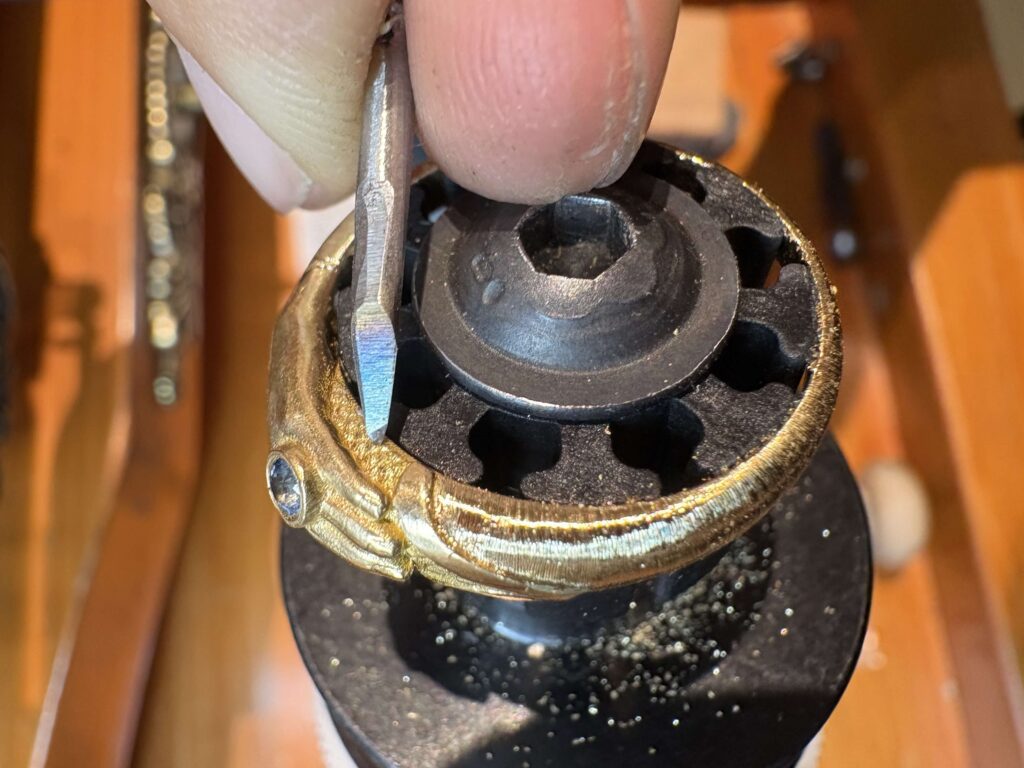
对戒“Manus Amoris” (爱的双手) 雕刻过程 “Manus Amoris” engraving process
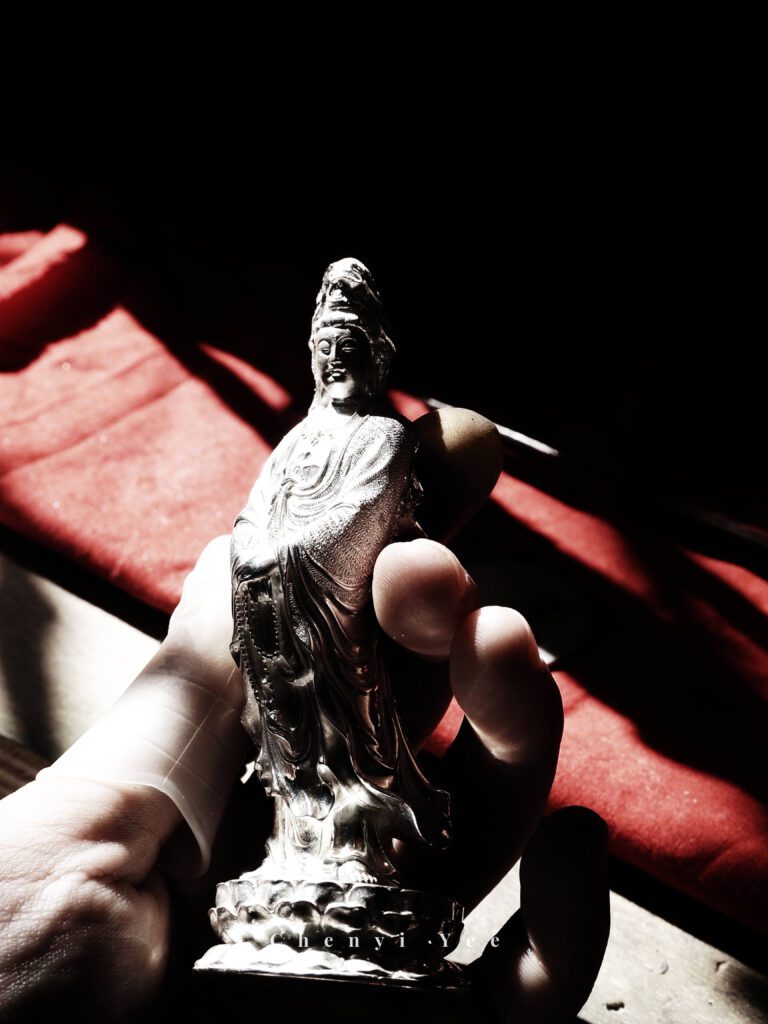
观音佛像雕刻《慈悲之心》Guanyin Sculpture: “Heart of Compassion”
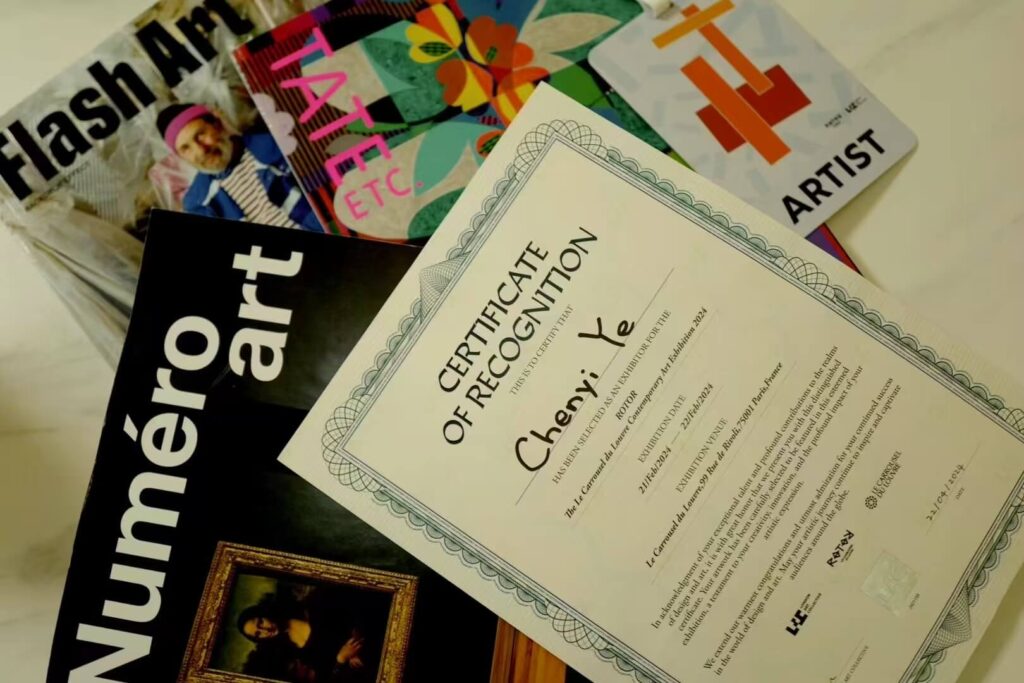
登上欧洲三本主流杂志: “Flash Art”, “Numero”及“TATE” 并获得参展证书
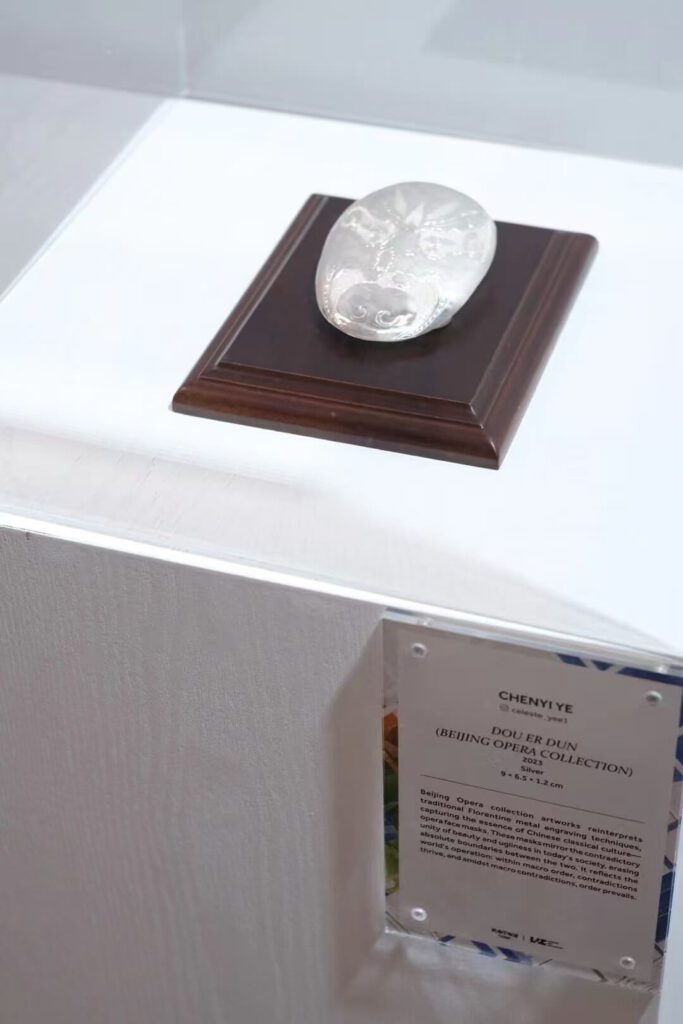
卢浮宫卡鲁塞尔展厅展出作品其一:Dou Er Dun (Beijing Opera collection)
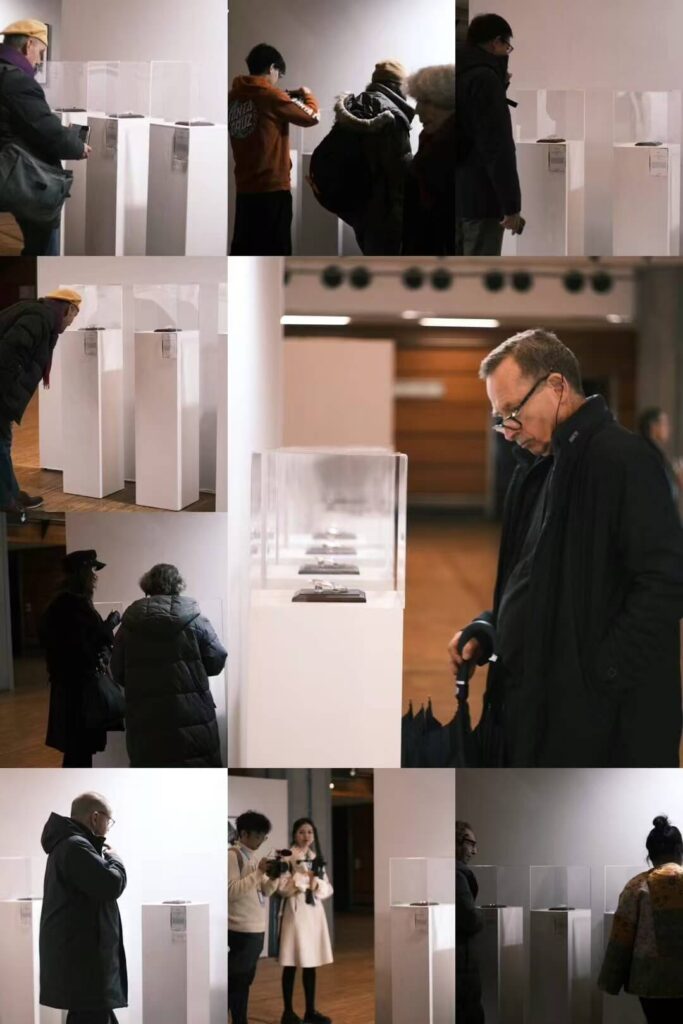
卢浮宫卡鲁塞尔展厅展出期间观众参观
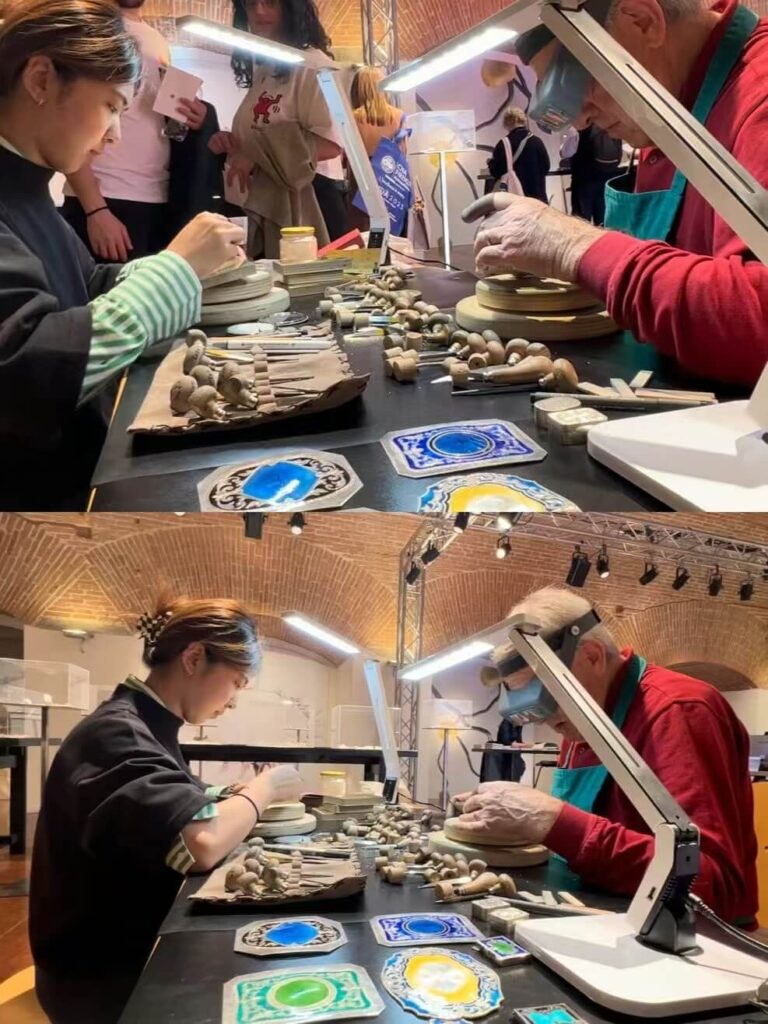
第87届国际手工博览会在佛罗伦萨与工艺大师Giuseppe Casale 同台展示雕刻技艺
The 87th International Craft Exhibition(MIDA) in Florence, showcasing engraving techniques alongside master craftsman Giuseppe Casale.


